I still remember sitting in AP English IV, cracking open The Great Gatsby thinking it was just another required classic I had to get through. I ended up loving it so much I didn’t just do one project. I did two. I aced both. And years later, it’s still one of my favorite books of all time.
People say it’s an easy read. And yeah, you can finish it quickly. But easy doesn’t mean shallow. This novel is layered with symbolism, social commentary, and uncomfortable truths about ambition, class, love, and obsession.
The Great Gatsby feels even more relevant in 2026 than it did when we first read it in high school.
If you’re wondering why The Great Gatsby is still relevant today, or how The Great Gatsby connects to modern society in 2026, let’s get into it.
Why The Great Gatsby Is Still Relevant in 2026
We live in a culture obsessed with image.
Curated Instagram feeds. Luxury lifestyles funded by credit cards. Guys renting sports cars to sell “courses” on Instagram. Tech millionaires trying to look like old money. Influencers throwing parties for people they barely know in empty houses, because they can’t afford furniture.
That’s not just 2026.
That’s Gatsby.
F. Scott Fitzgerald wasn’t just writing about the Jazz Age. He was writing about ego, illusion, and the performance of success. Those themes never aged. They evolved.
The Green Light Symbolism and the 2026 Dream
If you’ve ever searched for the Green Light symbolism in The Great Gatsby, you know it represents Gatsby’s dream. His hope. His belief that if he just reaches a little further, he can finally have everything.
In 2026, the Green Light looks like the promotion you keep refreshing your inbox for.
The perfectly curated relationship even if you’re both not even remotely happy.
The house that’s slightly out of your budget but the talk of everyone in your hometown.
The viral post that changes your life for a week.
We’re still reaching.
We’re still chasing.
We’re still telling ourselves that once we get there, we’ll finally feel whole.
In the novel, the American Dream is tied to wealth and status. In 2026, it’s tied to visibility and validation. Different tools. Same desperate hunger.
That’s why the Green Light remains relevant.
The Valley of Ashes and Economic Inequality Today
The Valley of Ashes represents moral decay and the human cost of wealth. It’s the shadow side of luxury.
And in 2026, that shadow hasn’t disappeared.
It’s gig workers delivering five star lifestyles to people who don’t tip.
It’s warehouse employees packing influencer brand deals.
It’s families drowning in student loan debt.
It’s communities hit hardest by inflation and climate disasters and living in food deserts.
We glamorize East Egg wealth while pretending the Valley doesn’t exist.
If you’re looking for The Great Gatsby themes explained in a modern context, this is one of the biggest. Wealth has a cost. And the people paying it usually aren’t the ones holding champagne glasses.
The Eyes of Dr T J Eckleburg and Being Watched 24 7
The Eyes of Dr. T.J. Eckleburg stare over the Valley like a silent judge. Some read them as God. Others see empty commercialism.
In 2026, we’re constantly being watched.
By algorithms.
By security cameras.
Hell, even by your neighbors cameras.
By brands tracking our behavior.
By strangers scrolling through our lives.
We perform morality online. We turn outrage into content. We monetize forced vulnerability.
But are we actually more accountable? Or just more visible?
The symbolism of the Eyes of Dr. T.J. Eckleburg feels almost prophetic in a world where surveillance and data tracking are just normal parts of life.
East Egg vs West Egg and Class Division in 2026
East Egg represents old money. Inherited privilege. Power that doesn’t need to prove itself.
West Egg represents new money. Flashy success. The need to show you’ve made it.
In 2026, class division is still very real.
Tech founders worth billions still can’t buy legacy. Influencers can buy mansions but can’t buy acceptance. You can make money, but breaking into elite circles is a different game.
Gatsby threw the biggest parties in New York. But he never truly belonged. Who were his real friends? The people he could depend on and that could depend on him? Or even offer advice.
If you’re analyzing East Egg vs West Egg symbolism, it’s not just about geography. It’s about access. It’s about who gets invited in and who’s always slightly outside the velvet rope.
That hasn’t gone anywhere.
Gatsby’s Parties and Social Media Culture
Gatsby’s parties are legendary. Loud. Over the top. Packed with people who don’t even know him. Sure, they’re glamorous. But they’re also hollow.
That’s 2026 social media culture in a nutshell.
We broadcast vacations. Designer labels. Perfect bodies. Aesthetic relationships. Dreamy and impractical morning routines.
But when the music stops, who actually stays?
When Gatsby dies, almost no one shows up to his funeral.
That’s the gut punch.
All that performance. All that spectacle. And in the end, almost no real connection.
If your value is built on image, what happens when the image fades?
The American Dream Then and Now
At its core, The Great Gatsby is about the American Dream and how easily it can turn into obsession.
Gatsby isn’t evil. He’s hopeful. Romantic. Determined. He believes he can recreate the past if he just works hard enough and earns enough money. As inspiring and relatable as he is, he’s wrong.
In 2026, we still believe success will fix everything. We still believe money equals healing. We still believe status equals love.
It doesn’t.
That’s why The Great Gatsby is still relevant. It exposes the lie at the center of unchecked ambition and asks us whether we’re chasing fulfillment or just chasing applause and approval from people that don’t actually matter.
Why You Should Reread The Great Gatsby in 2026
If you only read it for a grade, read it again for yourself.
You’ll see how The Great Gatsby connects to modern society. To hustle culture. To influencer culture. To economic inequality. To class division. To the pressure to constantly perform.
This novel isn’t stuck in the 1920s.
It’s about us.
We’re still chasing Green Lights.
Still throwing parties for strangers.
Still trying to outrun our past.
Still confusing wealth with worth.
And that’s exactly why The Great Gatsby still matters in 2026.
It doesn’t just tell a story.
It holds up a mirror.
And if we’re being honest, we’re still staring right back into it.
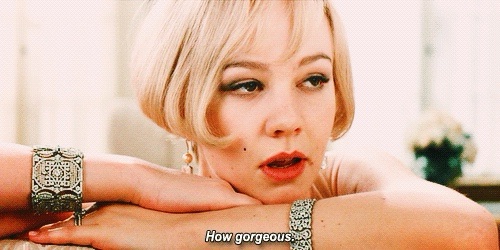
Think I’ll celebrate my recent reread with a watch of the beautifully done film adaptation by the brilliant Baz Luhrmann.
 The Girl in Gucci Glasses
Leave a comment