It’s no secret that consumerism can be a hot topic with valid arguments on both sides. On one hand, there are those who firmly believe that buying more things equals happiness. They think that splurging on a new car or clothes will bring them joy and fulfillment. Some even believe that purchasing expensive clothes or skincare products will boost their self-esteem and improve their appearance.
But on the other hand, there are those who see buying things as a waste of money and resources. They believe that excessive consumerism only leads to more pollution and a squandering of valuable resources that could have been used in a more meaningful way.
So where exactly does the truth lie? Well, I’d say it’s somewhere in the middle.
Unfortunately, consumerism has become so deeply ingrained in our culture that we often mindlessly participate in it without really thinking about the consequences. We’re caught up in a whirlwind of buying.
It’s easy to get sucked into this and lose sight of what truly matters in our lives. We buy unnecessary items to feel better about ourselves, but ironically, it often has the opposite effect. Not to mention many go into debt to achieve this.
Recent reports from the Federal Reserve Bank of New York State that the cumulative credit card debt of Americans stands at a staggering $1.08 trillion.

Speaking from personal experience, I vividly remember my college days when I first had money to spare. I went absolutely WILD with my spending, buying anything and everything that crossed my mind. It wasn’t until I entered the real world and had to be financially responsible for myself that I realized how unhealthy and irresponsible my spending habits were.
Now, fast forward to present day. At 33, I’ve learned to rein in my consumerism a bit. While I still appreciate nice things and treat myself from time to time, I buy things because I genuinely want them, and even then I ask myself “how many times can I use?” If the cost per use doesn’t justify the expense, then I walk away. This has saved me from buying trendy items that I would grow to forget about, and subsequently, waste money on.
But here’s the thing: I’m witnessing consumerism reach new heights these days. Trend cycles are getting shorter and shorter. People are flaunting their massive hauls, often from fast fashion retailers. And believe it or not, even kids are now asking for high-end skincare lines and luxury brands. It raises a bigger question beyond consumerism: Will anyone ever be content with what they have?
Not to mention, tweens don’t need retinol, I mean, really…what fine lines and wrinkles do they even have?
By constantly chasing the thrill of owning the next best thing, we never truly appreciate and enjoy what we currently possess.
It shouldn’t be normalized to proudly share a “mini” haul from Sephora that costs over a thousand bucks. We shouldn’t consider a $150 CHI flat iron as “cheap” and a $500 Dyson Airwrap as the new normal. While Dyson is undoubtedly a great brand, it belongs to the luxury category.
Now, I might sound like such a boomer, and that’s totally fine. Go ahead and make a TikTok calling me cringe—I’ll survive. But it’s worth pointing out that TikTok, with its massive platform, often promotes overconsumption. Many can’t even scroll through their FYP without stumbling upon obnoxious hauls, get-ready-with-me videos, or restock sprees. And if you’re lucky enough to avoid those, you’ll come across candid reaction videos pointing out this excessive behavior, just like what I see on my own “For You” page.
This typical kind of content usually aims to persuade viewers to buy the featured products. While it might feel satisfying to make a purchase in the moment, falling prey to such content only encourages overconsumption.
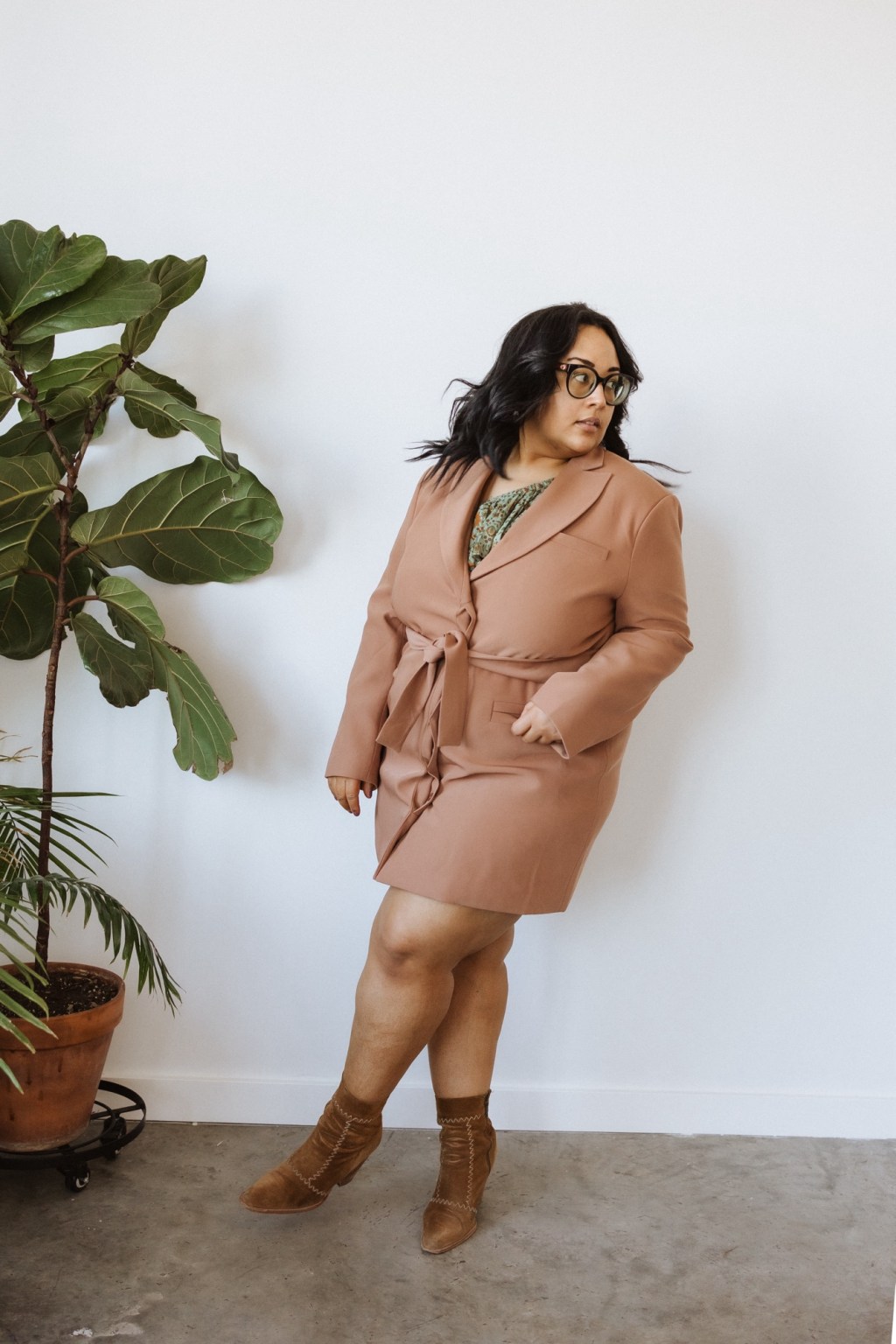
As someone who posts on platforms like LTK, I make a conscious effort to avoid promoting excessive consumption. I share outfits that I actually wear and often feature timeless pieces that have proven their worth in my personal closet. My posts are not just for the sake of posting; I want to provide value to my followers. While some may argue that I could gain more popularity on the app by posting all the latest trends, that’s not my style. My content blends a bit of boho, a touch of luxury, and a hint of grunge. If that resonates with you, you’ll enjoy following me. And if not, that’s great. Because truly, we are not supposed to all like the same things. You could argue that by having your own style and not chasing a never ending cycle of aesthetics promoted to you, that you’ll save money and be more meaningful and intentional with your purchase habits.
Ultimately one could argue that overconsumption is essentially a glamorized version of hoarding. And if we approach it from that perspective, we should ask ourselves: Why do we engage in this potentially harmful behavior? What emotion are we trying to fix by mindlessly accumulating possessions?
It’s a lot to think about, but hopefully, with some self-reflection, we can strike a healthier balance in our approach to consumerism. Remember, true happiness and fulfillment don’t solely rely on the things we own.
 The Girl in Gucci Glasses
Leave a comment