
This weekend, I was balls-deep in a closet clean-out frenzy, sorting through a mountain of clothes and shoes I’ve accumulated over the years. As I debated what to donate or sell on Poshmark, it got me thinking about the impact of consumerism on our daily lives. It’s essential to pause and reflect on how much we buy and why.
It’s no secret that we live in a consumer-driven society, where the pressure to constantly buy more and more is ever-present. From advertisements to influencers flaunting the latest trends, it’s easy to fall into the trap of mindless consumption.
One of the biggest drawbacks of consumerism is the clutter and chaos it can create in our lives. When we constantly buy new things without thought, we quickly become overwhelmed with stuff. Our homes become cluttered, our closets overflow, and our minds become cluttered as well.
I’ve gotta admit, I used to be a bit of a shopaholic. Not hoarder level or anything, but definitely a sucker for a good deal on clothes and shoes (my personal weaknesses). However, living in a modest studio apartment really forced me to rethink my shopping habits. I mean, there’s only so much space for stuff, right?
I used to be all about those limited edition Spell drops and hitting up Nordstrom on the regular. But I realized I was buying way more than I needed, and a lot of it was just sitting in my closet untouched. It was time to declutter and start being more intentional about what I brought into my space and more importantly, kept in my space.
Having a smaller apartment actually turned out to be a blessing in disguise. I had to really focus on what I was keeping around me, and let go of things that weren’t serving me anymore.
It can be exhausting trying to keep up with the constant influx of new purchases, and it can take a toll on our mental wellbeing.
10 Tips for Decluttering Your Closet
- Start with a plan: Before tackling any decluttering project, create a plan of action to help you stay organized and focused.
- Donate or sell unused items: Instead of throwing away items you no longer need, consider donating them to a charity or selling them on a platform like Poshmark to reduce waste.
- Sort items into categories: Organize your items into categories such as clothing, shoes, accessories, and household items to help you see what you have and what you can get rid of.
- Use storage solutions: Invest in storage solutions such as bins, baskets, and shelves to help keep your belongings organized and easily accessible.
- Create a capsule wardrobe: Consider creating a capsule wardrobe with versatile and timeless pieces that can be mixed and matched to create different outfits.
- Shop mindfully: Before making a purchase, ask yourself if you truly need the item and if it will add value to your life. Avoid impulse buying and opt for quality over quantity.
- Implement a “one in, one out” rule: For every new item you bring into your home, get rid of an old item to prevent clutter from building up again.
- Practice the 20/20 rule: If you haven’t used an item in the past 20 days and don’t foresee using it in the next 20 days, consider letting it go.
- Schedule regular decluttering sessions: Set aside time each month to declutter different areas of your home to prevent clutter from accumulating.
- Embrace minimalism: Embrace a minimalist lifestyle by focusing on quality over quantity, surrounding yourself with items that bring you joy, and living with intentionality.
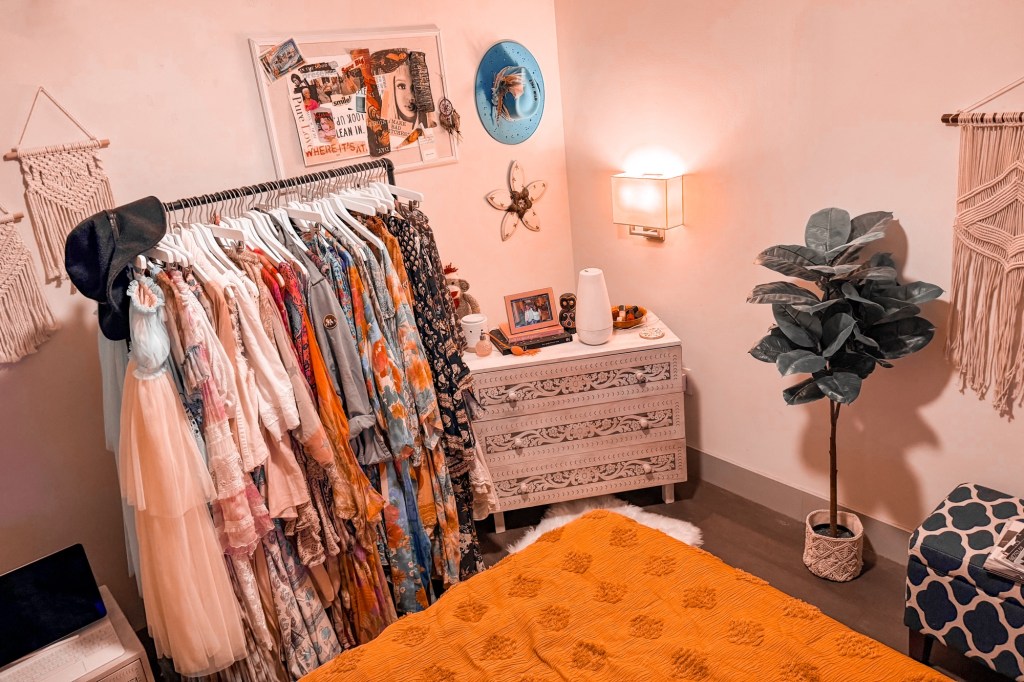
While I will never be a minimalist, living a more minimalist lifestyle has a plethora of benefits. By being mindful of what we bring into our homes, we can create a space that is serene, organized, and free of unnecessary distractions. When we are surrounded by fewer material possessions, we are better able to focus on what truly matters in life – relationships, experiences, and personal growth.
The next time you find yourself reaching for that impulse buy or adding yet another item to your shopping cart, take a moment to pause and consider if it’s really worth it. Do you truly need that new pair of shoes, or are you just buying it to fill a void? By adopting a more mindful approach to consumption, we can reduce our impact on the environment, save money, and ultimately lead happier, more fulfilling lives.
As I finished up my closet clean-out, I felt so much lighter.
It’s not about how much we have, but how we choose to live with what we have.
 The Girl in Gucci Glasses
Leave a comment